

The Lares Trek is a quieter, less-traveled route to Machu Picchu that takes you through remote mountain villages and across high passes in the Andes. It’s a chance to see a way of life that hasn’t changed much in generations, where people still speak Quechua, herd alpacas, and farm the land by hand beneath snow-covered peaks.
Over four days, you’ll hike trails still used by local families, visit small communities, and climb to nearly 4,700 meters at Condor Pass. You’ll have time to relax in the Lares Hot Springs, walk through farmlands in the Sacred Valley, and finish with a guided visit to Machu Picchu.
If you want a trek that blends beautiful scenery with cultural connection, this is a meaningful and memorable way to get there.
Peru’s Most Cultural Route to Machu Picchu
The Lares Trek is more than just a hike through the mountains. It gives you a glimpse into everyday life in the Andes, something most treks don’t offer.
You’ll pass through small villages like Quisuarani and Cancha Cancha, where people still speak Quechua, weave their own clothes, and farm by hand the way their families have for generations.
You’ll probably share the trail with someone herding alpacas or carrying firewood. Kids might wave as they walk to school. The views are beautiful with high passes, glacial lakes, and open valleys.
But it’s the people and their stories that stay with you. You’ll get to visit homes, meet families, and see what daily life really looks like in the mountains.
If you’re looking for a quieter, more meaningful way to get to Machu Picchu, this is it.
Your Journey Begins in Cusco
Your trek starts in Cusco, where you’ll meet your guide and group for a full pre-trek briefing the day before departure.
It’s a chance to go over the itinerary, ask questions, and make sure you’re fully prepared before heading into the mountains. We recommend arriving in Cusco at least two days early to adjust to the altitude and enjoy a bit of time in the city before the adventure begins.
Lares Trek Highlights
The Lares Trek route is full of moments you won’t forget. You’ll soak in natural hot springs, hike over Condor Pass at 4,700 meters, and camp beside quiet lakes and remote villages deep in the Andes.
Along the way, you’ll visit traditional communities, meet local families, and see how people live in some of the most isolated parts of Peru. The route takes you through changing landscapes.
You’ll see high alpine meadows, glacial valleys, and farmland in the Sacred Valley before ending with a guided visit to Machu Picchu. It’s a trek that combines nature, culture, and history in a way few other treks do.
Ready to Explore One of the Most Authentic Treks to Machu Picchu?
If you’re looking for a quieter trail with real cultural depth, the Lares Trek to Machu Picchu 4 days is one of the most rewarding routes you can take.
You’ll hike through breathtaking mountain scenery, visit communities that few travelers ever see, and end your journey at one of the most iconic places in the world, Machu Picchu. It’s not the most famous trail, but that’s part of what makes it so special.
Fewer crowds and more connections. A side of Peru most hikers miss.
Detailed Trip Itinerary
Pre-trek Briefing (Required): All participants of the Lares Trek must attend a mandatory pre-trek briefing the day before the trek begins.
This will take place either at your hotel or at our office in Cusco. During the briefing, we’ll go over the route, check your gear, and answer any last-minute questions. You’ll also receive a duffel bag for your personal belongings, which pack horses will carry during the trek. We recommend arriving in Cusco at least two days early to give your body time to adjust to the altitude before the hike.
Day 1: Cusco – Calca – Lares Hot Springs – Kiswarani Village – Yanacocha Lake
We’ll pick you up from your hotel in Cusco around 6:00 a.m. This is early enough to grab breakfast before we hit the road. From there, we’ll drive about an hour through the Sacred Valley to the town of Calca, where you’ll visit the local market. It’s a great opportunity to pick up small goods like coca leaves, bread, rice, or sugar. These are items that can be shared with families along the trail.
Then it’s on to Lares town, about a two-hour drive away. You’ll have time to relax and soak in the Lares Hot Springs, which range from cool to very warm. The water here is rich in natural minerals and believed to help with sore muscles and joint pain, perfect before a multi-day hike. While you enjoy the pools, our chef will prepare lunch nearby.
After lunch, we continue by car to the remote village of Kiswarani, the starting point of your trek. The people here still wear traditional clothing and live much like their ancestors did. From Kiswarani, we begin our hike. It’s gradual at first, then steeper as we make our way to the Seven Waterfalls. We’ll pause to enjoy the views before continuing up to Yanacocha Lake, where we’ll set up camp for the night at 3,800 meters (12,467 feet).
Once we arrive, you’ll have time to rest by the lake while the crew sets up camp. Dinner and tea will be served in the evening before a well-earned night of sleep under the stars.
- Meals: Lunch/Dinner
- Accommodations: Camping
- Maximum altitude.: 3,956 m/12,976 ft
- Minimum Altitude: 3,000 m/9,840 ft
- Distance to walk: 12 km
- Approximate walking time: 6 hours
Day 2: Yanacocha Lake – Condor Pass – Cancha Cancha Village

You’ll start the day with a warm cup of coca tea or coffee brought to your tent. While you pack up, breakfast is served with the lake and peaks in full view. The arrieros will load the gear as we get ready to head out.
The trail begins gently along the edge of the lake before climbing steadily to Condor Pass at 4,700 meters (15,354 ft). It’s a tough but beautiful stretch, taking about four hours. You might spot mountain birds like caracaras overhead and see llamas or alpacas grazing as you go. At the top, your guide will lead a small ceremony to honor Pachamama, followed by some snacks and drinks to refuel.
From there, it’s a two-hour descent to Acopata (3,750 m), where lunch will be ready. After eating, we hike another hour to our campsite in Cancha Cancha, one of the most remote villages in the region. It’s quiet here with no cars, no roads. It’s just mountains and stone homes.
In the afternoon, you’ll have the chance to visit the local school or talk with families in the village. If you’ve brought any small gifts such as school supplies, warm clothes, or dental items, the kids are always excited to receive them.
Once you’re back at camp, you’ll settle in for the evening. Hot drinks are always available, and if arranged in advance, a short massage can help ease sore legs after a long day.
- Meals: Breakfast/Lunch/Dinner
- Accommodations: Camping
- Maximum altitude.: 4,780 m/15,678 ft
- Minimum Altitude: 3,870 m/12,694 ft
- Distance to walk: 12 km/ 7.5 miles
- Approximate walking time: 7 hours
Day 3: Cancha Cancha Village – Sacred Valley – Ollantaytambo – Aguas Calientes
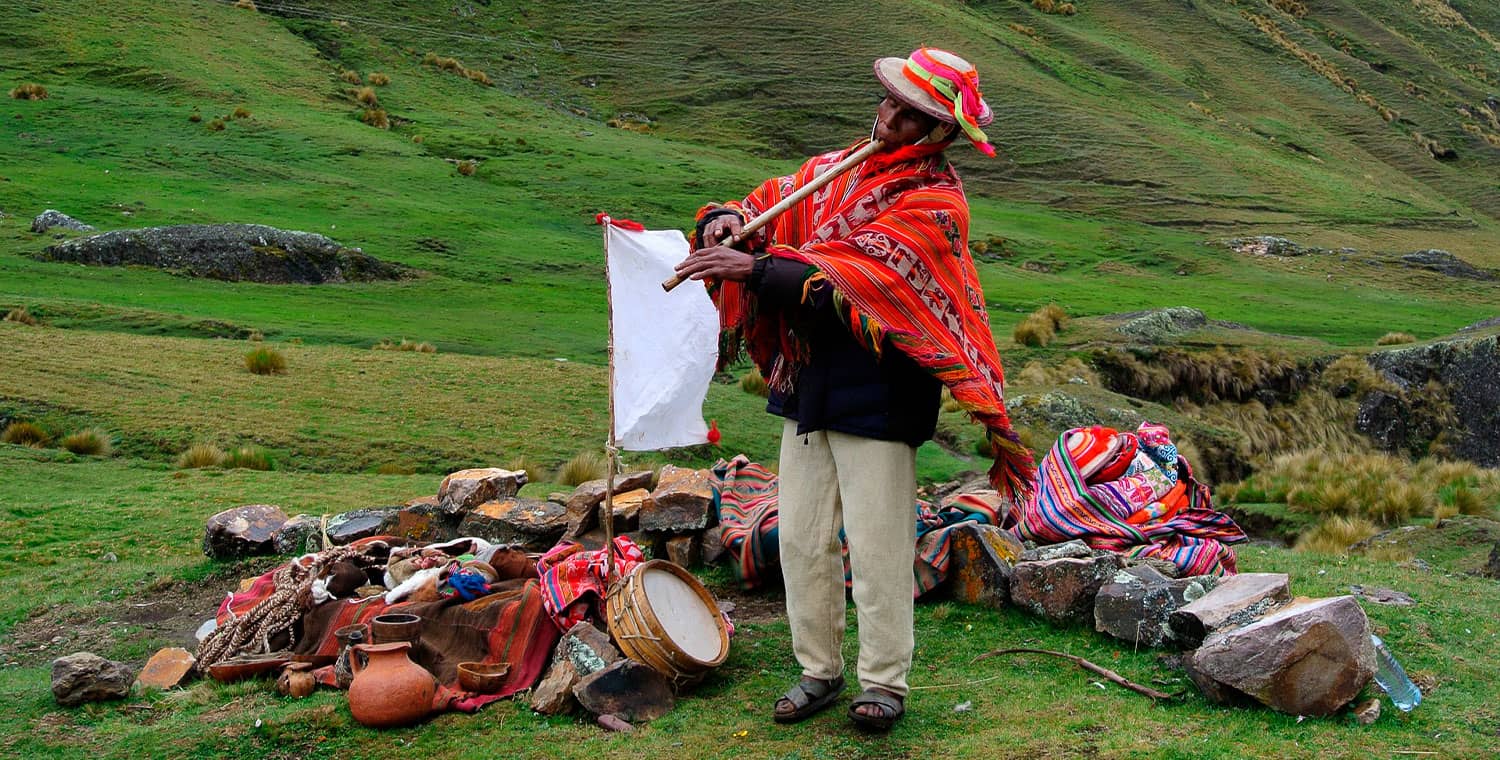
After breakfast, you’ll visit a local home in Cancha Cancha to get a closer look at daily life in the Andes. You’ll see how families grow their food and use traditional tools for farming, especially for potatoes.
You might even pick up a few words in Quechua, the language once spoken across the Inca Empire and still used here today.
From there, the trail begins a gradual descent into the Sacred Valley. The hike takes about four hours and leads through farmland that changes with the elevation. At higher altitudes, you’ll see potatoes and beans, while lower down, the fields give way to corn, quinoa, and avocados. Once you reach Huaran (2,700 m / 8,856 ft), you’ll stop for lunch and enjoy your last meal prepared by the trek team.
After lunch, you’ll say goodbye to the chef, porters, and horsemen before heading by van to Ollantaytambo.
There, you’ll have a little time to explore the town before catching the afternoon train to Aguas Calientes (Machu Picchu Pueblo). Once you arrive, you’ll check into your hotel and enjoy dinner at a local restaurant, resting up for the big day ahead.
- Meals: Breakfast/Lunch/Dinner
- Accommodations: Hotel
- Maximum altitude: 4,458 m/14,622 ft
- Minimum Altitude: 2,792 m/9,158 ft
- Distance to walk: 13 km
- Approximate walking time: 6-7 hours
Day 4: Machu Picchu Citadel – Return to Cusco

After breakfast at your hotel, you’ll take the bus up to Machu Picchu for a guided tour of the citadel. Over the next three hours, your expert guide will lead you through the most important sites and share the history behind this incredible Inca masterpiece.
Once the tour ends, you’ll have free time to explore on your own or take an optional hike to Huayna Picchu or Montaña Machu Picchu. Please note that you’ll need to book those tickets in advance, as they’re not included (additional cost: $75 USD).
When you’re ready, you’ll take the bus back down to Aguas Calientes, where you’ll have time to explore the town before catching your train to Ollantaytambo or Poroy. From there, our team will pick you up and drive you back to your hotel in Cusco. You can expect to arrive around 8:00 p.m.
- Meals: Breakfast
- Lowest Elevation: 2,040 m/ 6,691 ft
- Highest Elevation: 2,440 m/ 8,052 ft
SERVICES INCLUDED
- Professional English-speaking guide (plus an extra guide for groups of 9+): Expert bilingual leader for the trek, with backup for bigger groups.
- Pre-departure briefing at your hotel 1–2 days before the trek: In-person info session at your lodging to prepare for the adventure.
- Entry to Lares Hot Springs: Admission to natural thermal pools for relaxation during the trek.
- Hotel pickup and transportation to Quishuarani (starting point): Convenient transfer from your hotel to the trek’s beginning.
- Four-person tent shared between two people: Spacious tent for two trekkers to sleep comfortably.
- Sleeping mattress and pillow: Foam pad and cushion for better rest in the tent.
- Kitchen tent and dining tent with tables and chairs: Dedicated spaces for meal prep and eating with furniture.
- Toilet tent for private use: Portable private bathroom facility for hygiene.
- Chef and cooking staff: Professional cooks to prepare all trek meals.
- Wranglers and horses to carry all equipment: Handlers and animals to transport group gear.
- Horse to carry up to 8 kg of your personal gear: Pack animal for your limited belongings.
- Duffel bag provided for your belongings: Supplied bag to pack and organize your items.
- Emergency horse available if needed: Backup animal for tired or injured trekkers.
- All meals on the trek: 3 breakfasts, 3 lunches, 3 dinners: Full daily nutrition provided during the journey.
- Boiled water each morning and evening (for drinking and refilling bottles): Safe purified water supplied twice daily.
- Hot water provided for washing: Warm water for personal cleaning.
- Emergency oxygen and first aid kit: Medical supplies for altitude sickness and injuries.
- Expedition train ticket from Ollantaytambo to Aguas Calientes: Scenic rail ride to the Machu Picchu base town.
- Return Expedition train ticket from Aguas Calientes to Ollantaytambo or Poroy: Rail journey back after the visit.
- One night in a hotel in Aguas Calientes (double occupancy): Shared room lodging in the gateway town.
- Machu Picchu entry ticket: Admission to the ancient Inca citadel.
- Private guided tour of Machu Picchu: Exclusive expert-led exploration of the site.
- Round-trip bus tickets between Aguas Calientes and Machu Picchu: Shuttle transport up and down the mountain.
Services NOT Included:
- Sleeping bag (available to rent): Insulated bag for overnight warmth in tents, optional rental provided.
- Trekking poles (available to rent): Adjustable walking sticks for stability on trails, optional rental available.
- Huayna Picchu tickets (optional, $75 USD each, must be booked in advance and are not guided): Permits for hiking steep peaks near Machu Picchu, extra cost and self-guided.
- Lunch on Day 4 in Aguas Calientes: Midday meal in the town after Machu Picchu visit, not provided.
- Tips for your guide, cook, and wranglers: Gratuities for staff appreciation, at your discretion.
- Travel insurance (highly recommended): Coverage for trip risks like illness or cancellation, strongly advised but not included.
4 DAY LARES TREK PACKING LIST 
Daypack Essentials (Carried Daily)
This bag should be a comfortable 20 – 30-liter capacity pack, holding everything you need between camp breaks.
- Documents & Money:
- Original Passport (Mandatory for Machu Picchu entry).
- Cash (Peruvian Soles) for tips, snacks, and souvenirs.
- Clothing & Protection:
- Waterproof and windproof Rain Gear (Jacket and/or poncho).
- Fleece jacket/Sweater or warm insulating layer.
- Sun Hat/Cap and Warm Hat/Beanie (for high passes and cold mornings).
- Sunglasses (UV rays are very strong at altitude).
- Warm Gloves or mittens.
- Buff/Neck Gaiter for warmth or dust protection.
- Hydration & Energy:
- Water Bottle or Hydration Reservoir (2–3-liter capacity). Note: Plastic bottles are not allowed in Machu Picchu.
- Water purification tablets or filter.
- High-energy Snacks (energy bars, trail mix, dried fruit).
- Coca leaves/tea bags (optional, for altitude).
- Electronics & Misc:
- Headlamp with spare batteries.
- Camera/Smartphone and a Portable Charger (Power Bank).
- Sunscreen (SPF 30+) and Lip Balm with SPF.
- Insect repellent (especially for lower altitudes/Machu Picchu).
- Small personal First-Aid Kit (Blister plasters, pain relievers, altitude medication).
- Toilet paper (in a plastic bag) and Hand Sanitizer.
Duffle Bag / Camp Gear (Carried by Mules/Porters)
This is your main luggage, which you typically won’t have access to until you reach the campsite each evening.
Sleeping & Camp
- Sleeping Bag: Rated for -10°C (14°F) comfort or lower, as nights are very cold. Can usually be rented.
- Comfortable Camp Shoes (Sandals, Crocs, or lightweight sneakers).
- Sleeping Bag Liner (Optional, for extra warmth).
- Pajamas or clean Thermal Underwear for sleeping.
Clothing (Layering System)
- Base Layers (Moisture-Wicking): 2-3 sets of thermal tops and bottoms.
- Trekking Shirts: 3-4 moisture-wicking short or long-sleeve shirts (avoid cotton).
- Trekking Pants: 1-2 pairs of quick-dry trekking pants (zip-off legs are versatile).
- Hiking Socks: 3-4 pairs of wool or synthetic hiking socks.
- Underwear: 4-6 pairs of moisture-wicking underwear.
- Insulated Jacket: A down or synthetic puff/ski jacket for cold evenings.
- Swimsuit (For visiting the hot springs at Lares or Aguas Calientes).
- Rain Pants (Optional, but highly recommended for the rainy season/extra cold).
Toiletries & Personal
- Toothbrush, toothpaste, biodegradable soap, and deodorant.
- Wet wipes or a small, quick-dry towel.
- Personal medications.
Trekking Gear
- Sturdy Hiking Boots (Waterproof and well broken-in!).
- Trekking Poles (Highly recommended for balance and knee relief on descents). Can usually be rented.
Important Tips
- Layering is Essential: The weather can change from hot sun to freezing rain/snow quickly. Dress in layers (Base, Mid, Outer).
- Weight Limit: Your trek tour guide will provide a duffle bag and enforce a strict weight limit (8 kg) for the mules/porters.
- Plastic Bottles: Single-use plastic bottles are banned from Machu Picchu. Use a reusable container or hydration bladder.
- Altitude Acclimation: Spend a few days in Cusco or the Sacred Valley before starting your trek to help acclimate to the high altitude.
PRICES & ADD-ONS
Group: USD $690 per person
Private: USD $750 per person
Group versus Private Treks: What’s the difference?
- Depending on the number of people in your booking, additional people may join the trek to make a full group.
- If you choose “private”, no additional people will be joining your group, no matter the size.
- Minimum booking size is two people; one person may book a group trek if Action Peru Treks is able to join that person with additional groups.
Discounts
- Under 18 years Discount: USD $20
- Under 7 years Discount: USD $35
Rentals
- Hiking Poles – USD $25 (pair)
- Sleeping Bag – USD $30 per person
- Private Tent – USD $40 per person
Upgrades
- Return Vistadome Train – USD $80 per person
- Return Hiram Bingham Train – USD $520 per person
- Sumaq Machu Picchu Hotel (5-star hotel) – USD $255 per person per night (double occupancy)
- Inkaterra El Pueblo Machu Picchu Hotel (5-star hotel) – USD $250 per person per night (double occupancy)
- El Mapi Hotel by Inkaterra (4-star hotel) – USD $115 per person per night (double occupancy)
- Tierra Viva Machu Picchu (3+ star hotel) – USD $60 per person per night (double occupancy)
- Private Tent – USD $40 tent.
Frequently Asked Questions for the Lares Trek
1. How difficult is the Lares Route?
The Lares Trek is considered moderate to challenging, suitable for those with good physical fitness but not requiring advanced technical skills.
It involves hiking 12-13 km per day for 6-7 hours over varied terrain, including steep ascents and descents.
The main challenges are the high altitudes (up to 4,780 m / 15,678 ft at Condor Pass) and potential weather changes.
It’s more accessible than the Classic Inca Trail, with opportunities for breaks, cultural stops, and support from horses carrying gear.
We recommend cardio training and acclimatization in Cusco beforehand to prepare.
2. How long is the Lares Route and what is the daily hiking time?
The trek covers approximately 37 km / 23 miles over 4 days, including the visit to Machu Picchu.
Daily distances and times are:
- Day 1 (12 km, 6 hours)
- Day 2 (12 km, 7 hours)
- Day 3 (13 km, 6-7 hours)
- Day 4 (no hiking, focused on Machu Picchu exploration).
The itinerary allows time for meals, village visits, and rest, making it paced for enjoyment rather than speed.
3. What makes the Lares Route unique compared to other routes like the Inca Trail?
The Lares Trek emphasizes cultural immersion and remote Andean life over archaeological sites.
You’ll pass through villages like Quishuarani and Cancha Cancha, interact with Quechua-speaking families, see traditional farming and weaving, and share trails with locals herding alpacas.
It’s quieter with fewer crowds, blending stunning scenery (high passes, lakes, and valleys) with authentic community experiences.
Unlike the Inca Trail, it doesn’t require permits far in advance and ends with a train to Aguas Calientes for Machu Picchu.
4. When is the best time to do the Lares Trek?
The dry season from May to September is ideal, offering clearer skies, cooler temperatures, and minimal rain.
Shoulder months (April and October) are viable but may have occasional showers.
The wet season (November to March) can make trails muddy and slippery, so it’s less recommended.
Weather in the Andes is unpredictable year-round, so pack layers regardless.
5. How do I prepare for altitude sickness on the trek?
Altitude sickness can affect anyone, regardless of fitness.
We recommend arriving in Cusco at least 2 days early to acclimatize, staying hydrated, eating lightly, and avoiding alcohol initially.
During the trek, our guides carry emergency oxygen and a first aid kit. Drink coca tea (provided), take it slow on ascents, and inform your guide of any symptoms like headaches or nausea.
Acclimatization hikes in Cusco or the Sacred Valley beforehand are helpful.
6. What should I pack for the Lares hike?
Pack light, as horses carry up to 8 kg of your personal gear in the provided duffel bag.
Essentials include: layered clothing (base layers, fleece, waterproof jacket/pants), warm hat/gloves for cold nights, sturdy hiking boots, trekking poles (rentable), sunscreen/hat/sunglasses, reusable water bottle, snacks, personal medications, headlamp, bathing suit for hot springs, and a daypack (20-30L) for daily items like camera and rain gear.
A sleeping bag (rentable if needed) rated for cold temperatures is recommended, as nights can drop below freezing.
7. Do I need a guide, and is the trek possible without one?
A professional English-speaking guide is included and highly recommended for safety, navigation, cultural insights, and logistics.
The trek passes through remote areas with no clear signage, and guides handle emergencies, ceremonies (like at Condor Pass), and interactions with locals.
While experienced hikers might attempt it independently, it’s not advised due to permits, transportation, and support needs. For groups of 9+, an extra guide is provided.
8. What type of food and meals are provided?
All meals during the trek are included except Breakfast on Day 1 and lunch on Day 4:
3 breakfasts, 3 lunches, and 3 dinners, prepared by our chef using fresh, high-energy ingredients like pasta, rice, chicken, vegetables, fruits, and local staples (e.g., potatoes, quinoa).
Vegetarian or special dietary options are available with advance notice.
Boiled water is provided twice daily for refilling bottles, and hot drinks like coca tea or coffee are served.
Snacks are offered at high points like Condor Pass.
For more information, read about our Food on Treks
9. What are the accommodations like?
Nights 1 and 2 are camping in 4-person tents (shared by 2 people) with sleeping mats and pillows provided.
Campsites are at scenic spots like Yanacocha Lake (3,800 m) and Cancha Cancha (3,870 m), with kitchen/dining tents, a toilet tent, and hot water for washing.
Night 3 is in a hotel in Aguas Calientes (double occupancy). Tents are spacious and set up by the crew; expect cold nights, so bring a warm sleeping bag.
10. Are there toilets and showers on the trek?
A private toilet tent is provided at campsites for hygiene. Along the trail, facilities are limited to natural stops, but the itinerary includes a stop at Lares Hot Springs on Day 1 for soaking and relaxation (showers available there).
Hot water is provided for washing at camps. The hot springs’ mineral-rich pools help with muscle recovery.
11. What if I can’t finish the trek due to health issues?
If you’re unable to continue (e.g., due to altitude sickness), our guides will assist you to the nearest access point for transportation back (e.g., to Calca or Ollantaytambo).
An emergency horse is available for tired trekkers.
In extreme cases, helicopter evacuation can be arranged at your expense (travel insurance required).
No refunds for unfinished portions, but we’ll help rejoin the group for Machu Picchu if possible.
12. Do I need my original passport, and can I change dates after booking?
Yes, bring your original passport—it’s required for train tickets, Machu Picchu entry, and checkpoints.
If renewing, inform us in advance for updates (fee may apply).
Date changes are generally not possible once tickets are purchased, as government permits and trains are non-transferable and non-refundable.
Contact us immediately if needed; deposits are non-refundable for cancellations.
13. What about tipping and additional costs?
Tipping is not included but appreciated for the guide, chef, and wranglers – typically $20-50 USD per person total, based on service.
Other non-included items: sleeping bag/trekking poles (rentable), Huayna Picchu tickets ($75 USD, book in advance), lunch on Day 4, and travel insurance (highly recommended for medical/evacuation coverage).
14. How many people are in a group, and is it sustainable?
Groups are typically small for a personalized experience, with an extra guide for 9+ people.
We prioritize sustainability by supporting local communities (e.g., village visits, market stops in Calca), using pack horses responsibly, and providing eco-friendly facilities like the toilet tent.
Your trek benefits remote families through interactions and optional gifts like school supplies.
15. Is the Lares Trekking suitable for beginners or families?
Yes, with preparation – it’s accessible for beginners, families, or casual hikers due to the moderate pace, cultural focus, and support (horses for gear, emergency horse).
It’s not ideal for very young children or those with mobility issues, but older kids and fit seniors often enjoy it.
Acclimatization and fitness training are key; consult us for customizations.
16. Lares trek vs Salkantay trek?
Both the Lares Trek and Salkantay Trek are popular alternative routes to Machu Picchu in Peru, offering stunning Andean experiences without the strict permit requirements of the Classic Inca Trail.
The Lares route emphasizes cultural immersion in remote Quechua communities, while the Salkantay Trek prioritizes dramatic natural landscapes and physical challenge.
17. How high is the lares trek?
The standard Lares route often peaks at around 4,700–4,800 meters (15,400–15,750 feet) at passes like Pachacutec (also spelled Pachakuteq) or Condor Pass.
18.- Why Choose Action Peru Treks for Salkantay Trek?
Among 800+ Peruvian operators, Action Peru Treks is a Quechua-owned indigenous company that excels in authentic, ethical adventures.
- Ethical Roots: Fair wages, community fundraisers, sustainable Andean immersion.
- Top Reviews: TripAdvisor Excellence; raves for “exceptional service” and organization.
- Expert Guides: Our Guides deliver fun, cultural insights in small groups.
- Gourmet Comfort: Chef buffets for all diets, cozy camps, smooth logistics.
- Community Focus: Education aid in remote areas; adaptable treks with epic views.
19.- Are there other alternative treks similar to the Lares trek?
Yes, we offer several excellent alternatives to the Lares Trek, all leading to Machu Picchu with stunning scenery and unique experiences:
- Salkantay Trek (5 days): A challenging route with dramatic snow-capped peaks, turquoise lakes, and diverse landscapes—from high passes to cloud forests.
- Ancascocha Trek (4-5 days): A remote, off-the-beaten-path adventure (named one of National Geographic’s top hikes) featuring alpine lakes, Inca sites, and a section connecting to the Classic Inca Trail.
- Inca Quarry Trek (4 days): An easier, more cultural hike visiting ancient quarries used for Ollantaytambo’s stones, with waterfalls and panoramic views.
- Hidden Valley Trek (5 days): One of the newest routes, blending remote villages, Inca ruins, and breathtaking Andean vistas for a truly immersive experience.
Whichever you choose, we’ll ensure it’s a once-in-a-lifetime adventure!


